Good Schools for Music Production: Top Picks

- 1.
Why the Right School Can Make or Break Your Beat Game
- 2.
What Degree Actually Opens the Studio Door? (Spoiler: It’s Not Just a B.A.)
- 3.
The Secret Sauce Behind Elite Music Production Programs
- 4.
Taylor Swift’s College Myth—And Why Formal Ed Still Matters
- 5.
Top 5 Good Schools for Music Production That Actually Deliver ROI
- 6.
What Software & Gear Do the Best Programs Actually Use?
- 7.
The Hidden Cost of “Cheap” Music Schools
- 8.
Online vs. On-Campus: Can You Really Learn Music Production From Your Basement?
- 9.
Alumni Who Made It—And What Their Schools Taught Them
- 10.
How to Pick Your Perfect Fit—Without Burning Cash or Dreams
Table of Contents
good schools for music production
Why the Right School Can Make or Break Your Beat Game
Ever walked into a studio and felt like the air itself was humming your melody before you even touched a fader? That’s the magic we’re chasing—and good schools for music production are the launchpads that turn bedroom dreamers into chart-toppers. Not all campuses vibe the same way, y’know? Some spit out clones with Pro Tools certificates but zero soul; others? They teach you how to make silence speak. In this wild, analog-meets-digital jungle, your choice of good schools for music production isn’t just about tuition—it’s about legacy, mentorship, and whether your professor once recorded with Prince or just watched a YouTube tutorial. We’ve dug through syllabi, studio specs, and grad success stories so you don’t have to scroll through 3 a.m. Reddit rabbit holes wondering, “Is this worth 60K?” Spoiler: some are. Some… not so much.
What Degree Actually Opens the Studio Door? (Spoiler: It’s Not Just a B.A.)
“What degree is best for music production?”—asked every confused high school senior while their mom yells from the kitchen, “Get a real job!” But hold up. The truth is, degrees in music production come in more flavors than Baskin-Robbins. You’ve got the Bachelor of Science in Music Technology, the Bachelor of Fine Arts in Sound Design, even interdisciplinary hybrids like Music Business + Audio Engineering. And here’s the tea: top-tier good schools for music production like Berklee or NYU don’t just hand you a mic—they hand you internships at Electric Lady Studios, collabs with Grammy winners, and gear worth more than your car. But don’t sleep on smaller programs either. A focused A.A.S. from a tech-forward community college might land you in a Nashville tracking room faster than an Ivy League theory seminar. The key? Match your degree to your dream—not your cousin’s LinkedIn post.
The Secret Sauce Behind Elite Music Production Programs
It’s not just about having a Neve console in Room 3B (though, let’s be real—that helps). The real differentiator among good schools for music production is culture. Do students jam after class in underground listening lounges? Are faculty still cutting records on weekends? At places like USC Thornton or Full Sail, the curriculum breathes—it adapts to AI plug-ins, spatial audio, even TikTok virality. They teach you to engineer a mix that slaps on AirPods and high-end monitors. Meanwhile, some “prestigious” schools recycle 90s MIDI labs like it’s still dial-up internet. Nah. The best good schools for music production understand that today’s producer needs to be part coder, part therapist, part sonic chef—and they build studios that feel more like creative communes than classrooms.
Taylor Swift’s College Myth—And Why Formal Ed Still Matters
“Did Taylor Swift go to college for music?” Nope—and that’s the beauty of it. But hold your “I don’t need school” TikTok rants. Taylor had industry access most of us daydream about: Nashville songwriting circles, exec mentors, label backing. For the rest of us? Good schools for music production are the great equalizer. They give you the technical chops to fix a vocal comp at 3 a.m., the legal literacy to negotiate your first sync license, and the network to find your future bandmate in a hallway. Taylor’s path is rare air. The rest of us climb with harnesses—and those harnesses are forged in the labs of good schools for music production. Don’t confuse outlier success with a roadmap.
Top 5 Good Schools for Music Production That Actually Deliver ROI
Let’s cut the fluff. You want names that won’t leave you drowning in debt with a diploma that gathers dust. Based on grad employment rates, studio access, alumni clout, and sheer creative energy, these good schools for music production are crushing it:
- Berklee College of Music (Boston, MA) – $52,000/year tuition, but 89% of grads land audio-related gigs within 6 months.
- NYU Steinhardt (New York, NY) – Urban immersion + world-class faculty = real-world prep.
- University of Miami Frost School – Latin, jazz, and electronic fusion in a city that never stops dancing.
- SAE Institute (Multiple Campuses) – Hyper-focused, hands-on, no-nonsense training.
- Full Sail University (Winter Park, FL) – 24/7 studios, industry-paced curriculum, and killer gear.
What Software & Gear Do the Best Programs Actually Use?
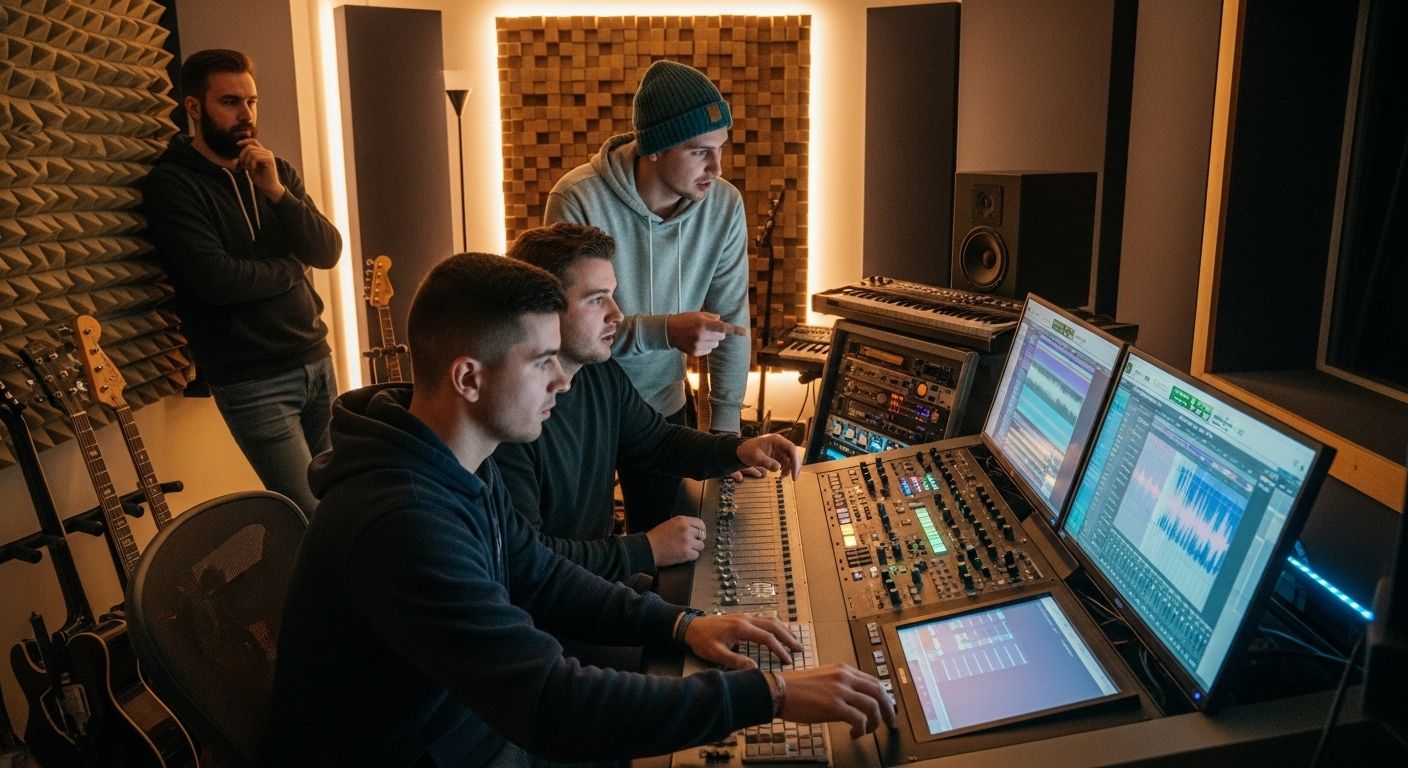
Here’s a reality check: if your dream school still worships Pro Tools HD like it’s the only god, run. The best good schools for music production embrace the full spectrum—Logic Pro for songwriters, Ableton Live for beatmakers, Reaper for the budget-savvy, and even open-source tools like Ardour. Plus, they’ve got SSL consoles, Moog synths, vintage tube mics, and Dolby Atmos rooms. Why? Because industry pros don’t care what DAW you learned—they care if you can think in sound. At top good schools for music production, you’ll patch analog outboards on Tuesday and train AI vocal models on Thursday. That’s the future. And it’s already playing in Studio C.
The Hidden Cost of “Cheap” Music Schools
Beware the $15K/year “audio college” with two iMacs and a cracked copy of FL Studio. While affordability matters, true good schools for music production invest in infrastructure that mirrors real studios. Think: acoustic-treated rooms, outboard gear lockers, mastering suites, and guest lecturers who’ve actually won Grammys. Cheap schools often skimp on faculty wages—meaning your “professor” is a grad student who’s never tracked a live drum kit. Meanwhile, elite programs charge premium tuition but offset it with scholarships, gear discounts, and direct pipelines to studios like Capitol or Abbey Road LA. Remember: when it comes to good schools for music production, you’re not just paying for a classroom—you’re buying backstage access.
Online vs. On-Campus: Can You Really Learn Music Production From Your Basement?
“My cousin made a viral beat on his laptop—why pay for school?” Valid. But good schools for music production offer something your basement never will: ears. Critical, trained ears. In-person programs let you hear how a room breathes, how mic placement changes emotion, how a compressor squashes a snare differently in analog vs. digital. Online degrees? Great for theory, scheduling flexibility, and intro modules—but they rarely replicate the tactile magic of twisting a Neve knob with sweat on your brow. Hybrid models (like Berklee Online + optional Boston residencies) might be the sweet spot. Still, if your goal is to engineer for live bands or mix orchestral scores, nothing beats campus studios. Choose your good schools for music production based on how much skin you need in the game.
Alumni Who Made It—And What Their Schools Taught Them
Let’s name-drop with purpose. Finneas (Billie Eilish’s producer)? Didn’t go to music school—but his collaborators did. Meanwhile, Grammy-winning engineer Emily Lazar? Grad of NYU. Hitmaker Jack Antonoff? Went to Skidmore but took production electives that shaped his sound. The pattern? Even self-taught legends lean on networks built in good schools for music production. Graduates from Full Sail have mixed for Drake; Berklee alums run studios in Berlin and Seoul. These schools don’t just teach compression ratios—they teach collaboration, resilience, and how to pitch your sound in a room full of skeptics. That’s the unspoken curriculum you won’t find in a syllabus.
How to Pick Your Perfect Fit—Without Burning Cash or Dreams
Choosing good schools for music production isn’t about rankings—it’s about resonance. Visit if you can. Sit in a class. Ask: “Can I book Studio 2 after midnight?” “Do grads get internship credits at real labels?” “Is the synth lab open on weekends?” Trust your gut. A $20K program that lets you build your own patchbay might beat a $60K one with velvet ropes. And hey—don’t forget financial aid. Many top good schools for music production offer merit scholarships, work-study studio tech roles, and gear grants. Start your journey right here at Suzzanne Douglas, dive deeper into our Education section, or explore how grad degrees can turbocharge your path in our feature on Music Industry Masters Programs Career Boostt. Your future self—sitting in a control room, coffee in hand, about to hit “print”—will thank you.
Frequently Asked Questions
What College is best for music production?
The best colleges for music production blend cutting-edge facilities, industry-connected faculty, and strong alumni networks. Top contenders among good schools for music production include Berklee College of Music, NYU Steinhardt, and the University of Miami Frost School—each offering real studio access and career pipelines that go far beyond the classroom.
What degree is best for music production?
A Bachelor of Science in Music Technology or a B.F.A. in Sound Design are among the most practical degrees for aspiring producers. These programs—offered by leading good schools for music production—combine technical training in DAWs, acoustics, and signal flow with creative coursework in composition and mixing, giving grads both artistry and employability.
Which program is best for music production?
The “best” program depends on your goals—but programs that emphasize hands-on studio time, mentorship from working professionals, and access to high-end gear consistently rank highest among good schools for music production. Berklee’s Music Production & Engineering major and Full Sail’s accelerated Bachelor in Music Production are standout examples that balance creativity with technical rigor.
Did Taylor Swift go to College for music?
No, Taylor Swift did not attend college for music—she signed with a label at 14 and moved to Nashville to pursue songwriting full-time. However, her unique path doesn’t diminish the value of good schools for music production for most aspiring artists and engineers, who rely on formal training to build technical skills, legal knowledge, and professional networks that self-teaching rarely provides.
References
- https://www.berklee.edu
- https://steinhardt.nyu.edu/music
- https://www.miami.edu/frost
- https://www.fullsail.edu
- https://www.sae.edu