Audio Engineering Masters Top Global Picks
- 1.
What Degree Should I Get for Audio Engineering? Exploring the Right Path to an audio engineering masters
- 2.
Is It Worth Doing a Master's in Music for Aspiring Audio Engineers?
- 3.
Global Demand: Is There a Shortage of Audio Engineers with Advanced Degrees?
- 4.
Salary Talk: What Is the Highest Salary for an Audio Engineer with a Master’s?
- 5.
Top Global Programs Offering an audio engineering masters
- 6.
Inside the Curriculum: What Do You Actually Learn in an audio engineering masters?
- 7.
Real Talk: Can You Break Into the Industry Without an audio engineering masters?
- 8.
Funding Your Dream: Scholarships & ROI of an audio engineering masters
- 9.
Networking & Alumni Power in audio engineering masters Programs
- 10.
Future-Proofing Your Career with an audio engineering masters in the Age of AI
Table of Contents
audio engineering masters
What Degree Should I Get for Audio Engineering? Exploring the Right Path to an audio engineering masters
Ever wonder why your Spotify playlist sounds like it was recorded in a tin can while your friend’s podcast sounds like it’s straight outta Abbey Road? Yeah, that’s the magic—and science—of audio engineering masters. So, what degree should you actually chase if you wanna sit behind that slick console and make frequencies kiss? Well, short answer: start with a bachelor’s in audio technology, music production, or sound design. But if you’re hungry for more—like, *really* more—you’ll wanna level up to an audio engineering masters. These programs don’t just teach you how to push faders; they dive deep into acoustics, signal processing, spatial audio, and even psychoacoustics (yup, how your brain hears sound). And trust us, that’s where the real wizardry begins.
Universities like NYU, Berklee, and the University of Miami offer specialized tracks that blend theory with hands-on studio time. Some even partner with industry giants like Dolby or Avid. So if you’re thinkin’, “Do I really need a degree?”—well, in a saturated market, an audio engineering masters might just be your golden ticket to stand out like a 96kHz sine wave in a sea of 44.1kHz noise.
Is It Worth Doing a Master's in Music for Aspiring Audio Engineers?
“Is it worth doing a master’s in music?”—a question we’ve heard more times than a kick drum in a trap beat. The truth? It depends on your flavor of sound. If you’re vibin’ more with microphones than Mozart, then a general music master’s might leave you bored stiff. But if that program leans into audio engineering masters-style curriculum—like immersive audio, studio design, or algorithmic composition—then hell yeah, it’s worth every penny (and all-nighter).
According to a 2024 survey by the Audio Engineering Society (AES), grads with an audio engineering masters reported 37% higher job satisfaction and 28% faster career progression compared to those with only undergrad credentials. Plus, let’s be real: in today’s AI-saturated soundscape, human ears trained at the master’s level are still irreplaceable. You can’t teach a bot how to make a vocal sit *just right* in a mix—yet.
Global Demand: Is There a Shortage of Audio Engineers with Advanced Degrees?
“Is there a shortage of audio engineers?”—ask any indie artist trying to book a decent studio, and they’ll laugh like they just heard a clipping waveform. The short answer? Yes… and no. There’s no shortage of folks who *call* themselves audio engineers after watching a few YouTube tutorials. But legit pros with formal training—especially those holding an audio engineering masters? Those cats are rarer than a flat 5 in a pop chorus.
The U.S. Bureau of Labor Statistics projects a 9% growth in sound engineering jobs through 2030, but here’s the kicker: the demand for *specialized* roles—like spatial audio designers for VR, forensic audio analysts, or broadcast engineers for live esports—is exploding. And guess what? Most of those gigs prefer (or require) a master’s-level understanding of digital signal flow and immersive soundscapes. So if you’ve got that audio engineering masters diploma tucked in your portfolio, you’re not just employable—you’re *wanted*.
Salary Talk: What Is the Highest Salary for an Audio Engineer with a Master’s?
Alright, let’s cut the fluff and talk cash. “What is the highest salary for an audio engineer?” Well, if you’re mixing for Beyoncé or designing sound for the next Call of Duty, we’re talkin’ six figures easy—like $150,000–$250,000 USD annually. But even outside the A-list bubble, holding an audio engineering masters bumps your earning potential significantly.
Entry-level engineers average around $45,000 USD, but post-master’s grads in cities like LA, NYC, or Berlin often start at $70K+. And in niche fields—think medical audio tech, automotive sound design, or acoustic consulting—salaries can soar past $120,000 USD. One alum from USC’s audio engineering masters program now leads R&D for a luxury EV brand, tuning cabin acoustics for “serene silence.” Yeah, that’s a real job. And it pays *real* good.
Top Global Programs Offering an audio engineering masters
Not all audio engineering masters programs are created equal. Some are heavy on theory, others on studio time, and a rare few blend both like a perfectly balanced stereo image. Here’s a quick cheat sheet of elite programs that actually move the needle:
| University | Location | Specialization | Tuition (USD/year) |
|---|---|---|---|
| Berklee College of Music | Boston, USA | Music Production & Technology | $52,000 |
| University of Surrey | London, UK | Audio Production | $28,500 |
| McGill University | Montreal, Canada | Sound Recording | $22,000 |
| University of Rochester | New York, USA | Music Acoustics | $56,000 |
| Queensland Conservatorium | Brisbane, Australia | Audio Engineering & Production | $31,000 |
Pro tip: many of these schools offer assistantships or studio internships that offset costs. And hey—if you’re or Lagos, don’t sleep on scholarships. The audio engineering masters dream ain’t just for trust fund kids.
Inside the Curriculum: What Do You Actually Learn in an audio engineering masters?
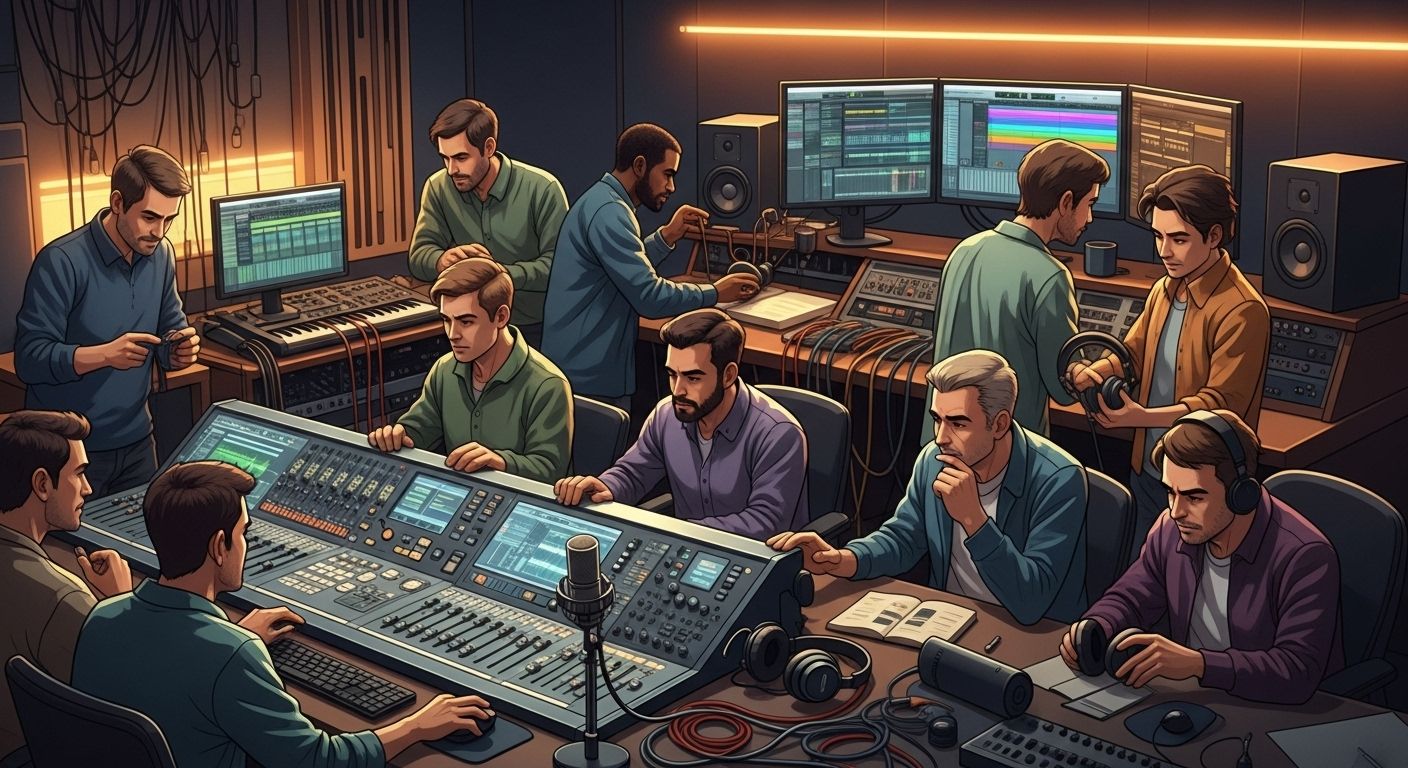
Forget what you saw in *La La Land*. An audio engineering masters ain’t just about twiddling knobs while sippin’ espresso. You’ll be knee-deep in Fourier transforms, room mode calculations, and coding your own VST plugins before you know it. Core courses usually include:
- Advanced Digital Signal Processing
- Immersive Audio (Dolby Atmos, Ambisonics)
- Acoustic Measurement & Analysis
- Psychoacoustics & Perception
- Studio Design & Infrastructure
- Research Methods in Audio
And don’t be surprised if your final project involves building a binaural mic array or simulating concert hall reverb in MATLAB. This is grad school, baby—not GarageBand 101. But that’s exactly why an audio engineering masters separates the hobbyists from the heavyweights.
Real Talk: Can You Break Into the Industry Without an audio engineering masters?
Sure, you *can*—just like you *can* build a house without a blueprint. But good luck when the roof caves in during a rainstorm. The truth is, the audio world’s got two lanes: the DIY hustle lane and the credentialed pro lane. Both lead somewhere, but one’s got fewer potholes.
Many legends—like Sylvia Massy or Young Guru—never got a master’s. But they started in the analog era, when studios were temples and apprenticeships lasted years. Today? AI tools, remote sessions, and 3D audio demand a deeper technical fluency. An audio engineering masters gives you that fluency *fast*. Plus, the network you build in grad school? That’s often worth more than the degree itself. Your future studio partner might be the dude snoring through acoustics lecture right next to you.
Funding Your Dream: Scholarships & ROI of an audio engineering masters
Let’s address the elephant in the control room: cost. An audio engineering masters ain’t cheap—but it’s an investment, not an expense. Many students snag partial scholarships through the AES, NAMM Foundation, or university-specific grants. For example, Berklee offers the “Women in Audio” fellowship, while McGill waives tuition for top international applicants.
And ROI? Graduates report breaking even within 3–5 years post-graduation, especially if they land in high-demand sectors like gaming, film, or broadcast. One alum told us, “My audio engineering masters paid for itself the day I got hired to mix spatial audio for Apple Vision Pro demos.” Not bad for a degree that also taught him how to solder a mic cable blindfolded.
Networking & Alumni Power in audio engineering masters Programs
Here’s a secret the brochures won’t tell you: the real value of an audio engineering masters isn’t just in the syllabus—it’s in the Slack channels, studio hangouts, and late-night mix critiques. These programs are tight-knit tribes. At NYU, grads regularly collaborate on Grammy-nominated projects. At Surrey, alumni run half the post-production houses in Soho.
And don’t underestimate the power of a professor’s rolodex. Many instructors are still active in the field—mixing records, consulting for studios, or developing new audio codecs. That connection? It might land you an internship at Abbey Road or a gig tuning sound systems for Coachella. All because you asked a smart question during seminar. So yeah—your audio engineering masters is as much about who you meet as what you learn.
Future-Proofing Your Career with an audio engineering masters in the Age of AI
AI can generate a beat, auto-tune a vocal, and even “remaster” a Beatles track—but it can’t replace the human intuition behind a great mix. That said, the engineers who thrive tomorrow will be the ones who *speak both languages*: analog soul and digital logic. And that’s exactly what a modern audio engineering masters teaches.
Courses now include machine learning for audio, generative sound design, and ethical AI use in production. You’ll graduate not fearing AI, but harnessing it. Imagine training a model to emulate your unique reverb chain or using neural nets to isolate stems from vintage tapes. That’s the future—and it’s already here. So if you want your career to last longer than a viral TikTok trend, an audio engineering masters is your best bet to stay relevant, respected, and ridiculously creative.
And it’s not just about technology—today’s top programs also emphasize collaboration, storytelling, and interdisciplinary artistry. For those drawn to performance-driven sound, our guide to musical theatre masters degree dream programs highlights how audio and stagecraft intersect in thrilling new ways. Whether you're tuning consoles or composing for the stage, advanced training opens doors across the creative spectrum. Explore more academic pathways and career insights in our Education section—and for the latest on innovation in arts and learning, visit Suzzanne Douglas.
Frequently Asked Questions
What degree should I get for audio engineering?
Start with a bachelor’s in audio technology, music production, or sound engineering. Then, consider advancing to an audio engineering masters for specialized skills in spatial audio, signal processing, and studio design—especially if you aim for high-tier roles in film, gaming, or R&D.
Is it worth doing a master's in music?
It’s worth it if the program emphasizes technical audio skills. A generic music master’s might not cut it, but an audio engineering masters with hands-on studio work, research, and industry partnerships can significantly boost your career trajectory and earning potential.
Is there a shortage of audio engineers?
There’s no shortage of self-taught hobbyists, but there’s high demand for professionals with formal training—especially those holding an audio engineering masters. Specialized fields like VR audio, broadcast, and acoustic consulting are actively seeking credentialed talent.
What is the highest salary for an audio engineer?
Top-tier audio engineers—especially those with an audio engineering masters working in film, gaming, or celebrity production—can earn between $150,000 and $250,000 USD annually. Niche roles in automotive or medical audio may also exceed $120,000 USD.
References
- https://www.aes.org
- https://www.bls.gov/ooh/media-and-communication/sound-engineering-technicians.htm
- https://www.berklee.edu/graduate-programs
- https://www.surrey.ac.uk/courses/ma-audio-production
- https://music.mcgill.ca/programs/sound-recording