Online Audio Engineering Degree: Expert Skills
- 1.
What Exactly Is an online audio engineering degree Anyway?
- 2.
Can You Really Earn an online audio engineering degree Without Setting Foot on Campus?
- 3.
Which Degree Path Gives You the Most Bang for Your Buck in Audio Engineering?
- 4.
How Long Until You’re Calling Yourself a Full-Fledged Audio Engineer?
- 5.
Top Schools Offering a Legit online audio engineering degree in the U.S.
- 6.
Is an online audio engineering degree Respected in the Real World?
- 7.
What Gear Do You Actually Need for an online audio engineering degree?
- 8.
Cost vs. ROI: Is an online audio engineering degree Worth the Investment?
- 9.
Skills You’ll Master in an online audio engineering degree Program
- 10.
How to Choose the Right online audio engineering degree for Your Creative Journey
Table of Contents
online audio engineering degree
What Exactly Is an online audio engineering degree Anyway?
Ever wonder how your favorite hip-hop beat gets that crisp snare or how a lo-fi indie track sounds like it was recorded inside a Brooklyn coffee shop with rain gently tapping on the window? Spoiler alert: it ain’t magic—it’s science, soul, and a whole lotta skill. Enter the online audio engineering degree: your golden ticket to mastering the art of sound without ever stepping foot into a traditional classroom. In today’s digital jungle, where Zoom meetings double as studio sessions and your laptop doubles as a mixing board, an online audio engineering degree isn’t just possible—it’s smart, sleek, and surprisingly soulful.
Can You Really Earn an online audio engineering degree Without Setting Foot on Campus?
“But wait,” you might be whisperin’ into your AirPods, “ain’t audio engineering all about touch, feel, and acoustics?” Fair question, fam. Yet here’s the tea: technology’s evolved faster than your Spotify algorithm. Top-tier institutions now offer immersive, hands-on online audio engineering degree programs that ship you real gear—interfaces, mics, even MIDI controllers—so you’re not just watching lectures; you’re living in the DAW. Whether you’re in rural Tennessee or downtown Chicago, your bedroom studio can double as a certified learning lab. That’s the beauty of a modern online audio engineering degree—it meets you where your dreams are, not where your zip code says you should be.
Which Degree Path Gives You the Most Bang for Your Buck in Audio Engineering?
Let’s cut through the noise (pun intended). Not all online audio engineering degree programs are created equal. Some lean technical—think signal flow, acoustics, and digital signal processing—while others vibe more creative, focusing on music production, scoring, and sonic storytelling. If you’re chasing studio gigs, internships, or even your own indie label, look for an online audio engineering degree that blends both: science with soul, meters with melodies. Bonus points if the curriculum includes real-world projects, mentorship from Grammy-nominated pros, and industry-standard software licenses baked right into tuition. Remember: it’s not just about the paper—it’s about the portfolio you build along the way.
How Long Until You’re Calling Yourself a Full-Fledged Audio Engineer?
Pop quiz: how many years does it take to become an audio engineer? If you guessed “as long as your coffee stays hot during a session,” you’re halfway there. But seriously—an online audio engineering degree typically rolls out in 2 to 4 years, depending on whether you go full-time, part-time, or “I-work-nights-at-a-bodega-while-chasing-my-dreams” mode. Associate degrees clock in around 2 years; bachelor’s? Usually 4. But here’s the kicker: many grads land internships or assistant gigs before they even walk (or Zoom) at graduation. That’s the hustle of the online audio engineering degree path—it’s built for doers, not just scholars.
Top Schools Offering a Legit online audio engineering degree in the U.S.
Not every “accredited” program delivers the goods. We scoured the web, polled industry insiders, and even peeked into studio Slack groups to bring you the real-deal institutions dishing out high-caliber online audio engineering degree options. Think Berklee Online, Full Sail University, and the Los Angeles Film School—all of which offer curricula that balance theory, tech, and tactile experience. These aren’t “watch-a-video-and-click-next” courses. Nah. You’ll be patching compressors, EQ’ing vocals like a pro, and even learning surround sound design—all from your home base. And yes, they send you the gear.

Is an online audio engineering degree Respected in the Real World?
“Will studios take me seriously if my degree came through Wi-Fi?” Look, the music biz runs on vibes—but also on results. If your mixes bump, your edits are tight, and your client list is growin’, nobody’s askin’ where you clicked “submit assignment.” That said, reputation matters. An online audio engineering degree from a school with industry ties, alumni in major studios, and a track record of job placement? That’s the seal of approval. Employers care less about your classroom and more about your chops. So focus on building a killer reel, not just a diploma. The online audio engineering degree is your launchpad—not your limit.
What Gear Do You Actually Need for an online audio engineering degree?
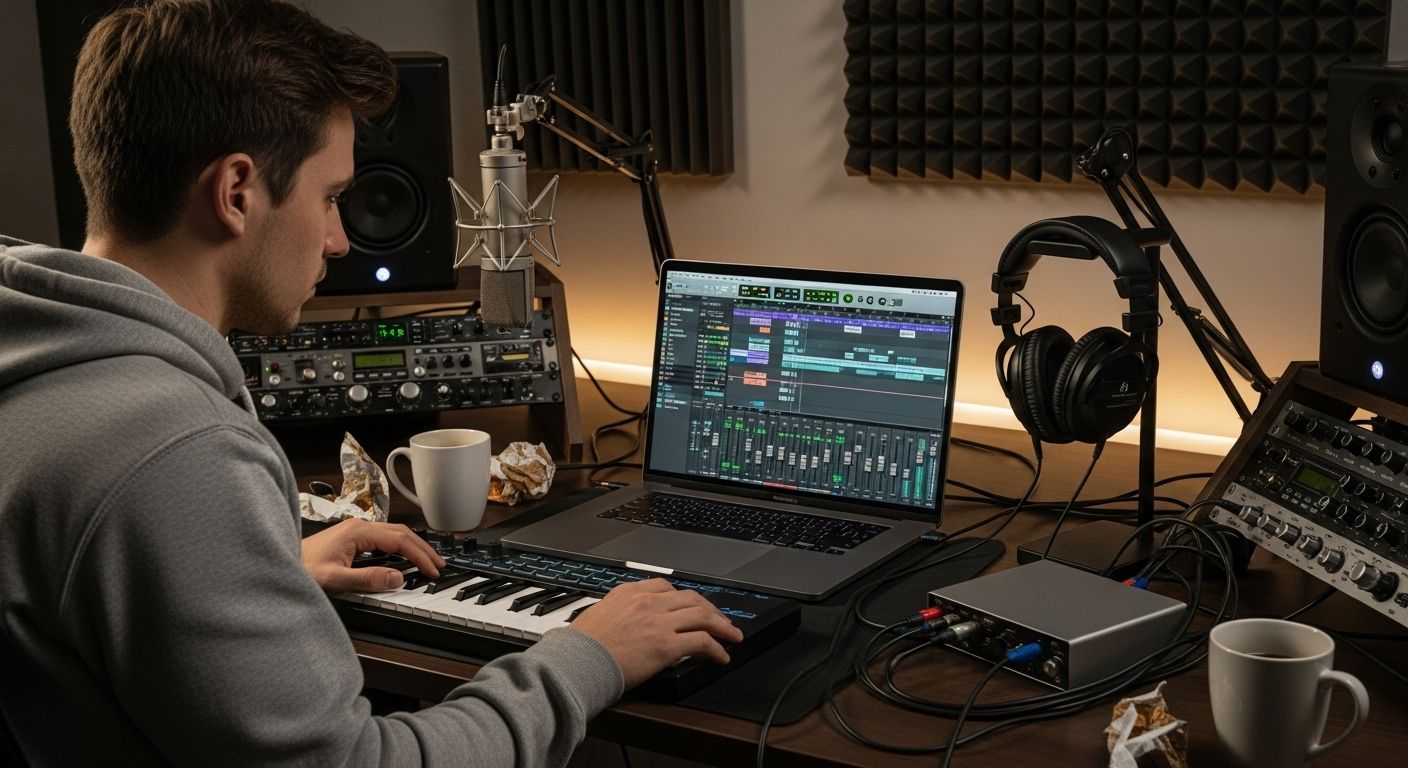
Good news: you don’t need a Neve console in your garage (though, hey, we ain’t mad if you do). Most legit online audio engineering degree programs include a starter kit—audio interface, condenser mic, headphones, maybe even studio monitors. Beyond that? A decent laptop (8GB RAM minimum, but 16GB is chef’s kiss), a quiet room (or at least one with decent acoustic treatment—foam panels, baby!), and a DAW like Pro Tools, Logic, or Ableton. Pro tip: treat your setup like a temple. Dust it, tune it, and never let your cat sleep on your MIDI keyboard. Your online audio engineering degree journey deserves reverence—and a clean signal path.
Cost vs. ROI: Is an online audio engineering degree Worth the Investment?
Let’s talk paper. Tuition for an online audio engineering degree typically ranges from $15,000 to $40,000 USD total—way cheaper than relocating to LA or NYC for a campus-based program. And with flexible payment plans, scholarships, and even income-share agreements (where you pay after you land a gig), the barrier’s lower than ever. But ROI isn’t just about dollars—it’s about doors opened. Graduates report landing roles as studio assistants, live sound engineers, podcast producers, and even VR audio designers. In a world where sound is everywhere—from TikTok clips to electric car alerts—a online audio engineering degree isn’t just art; it’s future-proofing.
“Sound is the invisible architecture of emotion.” — Unknown audio sage, probably muttering into a Neumann U87 somewhere in Nashville.
Skills You’ll Master in an online audio engineering degree Program
Beyond just turning knobs, an online audio engineering degree arms you with a Swiss Army knife of sonic superpowers: critical listening, signal routing, microphone techniques, digital audio theory, mixing, mastering, even basic coding for audio plugins. You’ll learn how to tame room modes, sculpt frequencies like clay, and automate like your life depends on it. And don’t sleep on the “soft” skills—client communication, deadline juggling, and the sacred art of saying “no” to demos that sound like they were recorded in a tin can. All of this lives inside a well-crafted online audio engineering degree curriculum.
- DAW proficiency (Pro Tools, Logic, Ableton)
- Acoustic treatment fundamentals
- Live sound reinforcement
- Audio for visual media (film, gaming, VR)
- Business & copyright basics
How to Choose the Right online audio engineering degree for Your Creative Journey
Picking your program ain’t like swiping right—it’s more like auditioning bandmates. Ask: Does the faculty include working engineers? Are grads landing gigs at places like Abbey Road Studios or Netflix? Can you specialize in hip-hop, classical, or game audio? And crucially—does the vibe feel human, not robotic? Your online audio engineering degree should feel like a mentorship, not a MOOC. For more on educational pathways, check out the Suzzanne Douglas homepage. Dive deeper into learning options over at our Education section. And if you’re curious how this stacks up against traditional routes, don’t miss our deep-dive piece: Music Engineering Degree Pro Studio.
Frequently Asked Questions
Can you get an audio engineering degree online?
Absolutely—you can earn a full online audio engineering degree from accredited U.S. institutions without ever stepping onto a physical campus. These programs provide hands-on training, industry-standard software, and real-world projects, making them just as valid—and often more flexible—than traditional in-person degrees.
What degree is best for audio engineering?
The best path typically starts with a bachelor’s in audio engineering, music production, or sound design—but an online audio engineering degree that blends technical acoustics with creative production often yields the richest results. Look for programs offering mentorship, studio access (virtual or physical), and portfolio development alongside core theory.
Where to study sound engineering online?
Top U.S. options for an online audio engineering degree include Berklee Online, Full Sail University, and the Los Angeles Film School. These institutions offer structured curricula, gear packages, and connections to industry professionals—all delivered through intuitive digital platforms designed for aspiring sound creators across the country.
How many years does it take to become an audio engineer?
With an online audio engineering degree, you can become job-ready in as little as 2 years (associate degree) or 4 years (bachelor’s). Many students begin freelancing or interning before graduation, meaning real-world experience often starts long before the diploma arrives. Speed depends on your pace—but passion accelerates everything.
References
- https://www.berklee.edu/online
- https://www.fullsail.edu/degrees/audio-production
- https://www.lafilm.edu/audio-production-degree/
- https://www.aes.org/education/
- https://www.soundonsound.com/techniques